How Many Wi-Fi Access Points Does a Larger Home or Property Need?
There's no reliable formula that turns square footage into an access point count. Two properties of identical size can call for very different Wi-Fi designs, because what actually determines the answer is what the signal has to pass through, how the space is laid out, and how many devices are competing for it at once — not how many square feet are on the plan. Concrete and masonry block a Wi-Fi signal far more than a stud-and-drywall wall does. A property with a detached garage, guest house, or pool house needs its own coverage plan, not just a stronger router in the main house. And a household streaming video on several devices, running security cameras, and controlling smart-home systems needs more consistent performance than one that mostly browses and checks email. The right number of access points is whatever gives every part of the property reliable coverage without wasting equipment or creating interference. That number comes from a plan, not a guess.
Why Square Footage Alone Doesn't Give the Answer
Two homes of the same size can need very different Wi-Fi designs. A single-story, open-concept home with mostly interior stud walls might get solid, reliable coverage with relatively little equipment; a two-story home of the same size, built with block or stucco-over-masonry exterior walls, might need more — not because it's bigger, but because the signal has to work harder to get through. Layout matters too: a long, narrow floor plan behaves differently than a compact one, and a finished basement or detached casita adds a coverage zone square footage doesn't account for. Square footage tells you how much space there is — not what's in the way, how it's used, or how many devices need to stay connected, which is what actually determines the count.
What an Access Point Actually Does
An access point is the equipment that broadcasts Wi-Fi into a room — separate from, though often confused with, a few other pieces of gear. A modem connects the property to the internet provider; a router directs traffic between the internal network and the internet, and most consumer all-in-one devices also include a built-in access point. A Wi-Fi extender rebroadcasts an existing signal to reach farther, usually by giving up part of its own bandwidth, and it's only as good as the signal it started with. A mesh node is a more capable extender, built to coordinate with identical nodes as a system. A dedicated access point is different: a purpose-built radio, usually ceiling- or wall-mounted, ideally with its own wired connection, and centrally managed alongside every other access point on the property.
The Factors That Determine Access Point Count
The number of access points a property needs comes from several factors interacting together, not any single one of them:
| Factor | How It Affects Access Point Planning |
|---|---|
| Floor plan | Open layouts need fewer APs per square foot than segmented ones |
| Construction | Concrete, masonry, and metal block signal more than drywall and wood framing |
| Floors | Each additional floor is typically its own coverage zone |
| Device count | More connected devices raise capacity needs independent of square footage |
| Outdoor areas | Usually need dedicated outdoor APs rather than indoor overflow |
| Detached structures | Each one is a separate coverage — and often backbone — decision |
| Wired backhaul | APs with their own wired connection perform more predictably than those relying on wireless relay |
| Performance expectations | Streaming, video calls, and AV/control systems raise the bar beyond basic browsing |
No single factor determines the count on its own — a professional design looks at all of them together for the specific property.
Building Materials Can Matter More Than Distance
It's easy to assume Wi-Fi coverage is mainly a distance problem. In practice, what the signal passes through often matters more than how far it travels. An access point twenty feet away through a stud wall may deliver a stronger signal than one ten feet away through a block wall, a metal-clad mechanical room, or a bank of low-E windows, whose thin reflective coating happens to block some of the same frequencies Wi-Fi uses. Bathrooms and kitchens tend to be difficult zones too, between plumbing, tile, and appliances. A walk-through of the actual construction beats a generic formula: identical floor plans built from different materials can need different access point counts to reach the same coverage.
Coverage and Capacity Are Different Problems
Coverage asks whether a device can get a usable signal in a given spot. Capacity asks how many devices that access point can serve well at once. A property can show full signal everywhere and still have frustrating Wi-Fi if too many devices are pulling from the same access point — video calls stutter, streaming buffers, smart-home commands lag. That's common in larger households with a lot of connected devices competing for the same radio. As a general rule in network design, once an access point is serving somewhere around a few dozen active devices at once, performance for everyone on it tends to suffer — one reason heavy device use can need more access points than square footage alone would suggest.
Why More Access Points Are Not Automatically Better
If some access points are good, more isn't necessarily better. Access points placed too close together, or run at too much transmit power, can interfere with each other — their coverage overlaps so much they compete for the same channels, hurting performance rather than helping. Poor channel planning creates the same problem even with the right count, and when access points aren't coordinated, a phone moving through the property can get stuck on a weaker, farther one instead of roaming to a closer one — a configuration issue, not a count issue. Good planning means the right number, in the right places, configured together.
Wired Backhaul vs. Wireless Mesh
Every access point needs a way to connect back to the network — its backhaul — either wired (typically Ethernet, often with Power over Ethernet) or wireless, the way most consumer mesh systems relay traffic node to node. A wired connection, run as part of a property's structured cabling, gives each access point dedicated bandwidth that isn't shared with anything else. A wireless mesh connection generally has to split a single radio's capacity between serving client devices and relaying to the next node, and that tradeoff compounds with each hop — on a larger property with several access points, it often shows up as inconsistent performance in the rooms and outbuildings farthest from the main equipment.
Mesh isn't always the wrong choice — for a smaller, open property, a rental where cabling isn't practical, or a lighter device load, a good mesh system can perform reasonably well. But where cabling is realistic, access points with their own wired connection back to a central switch are generally more reliable and leave more room to expand later.
What About Outdoor Wi-Fi?
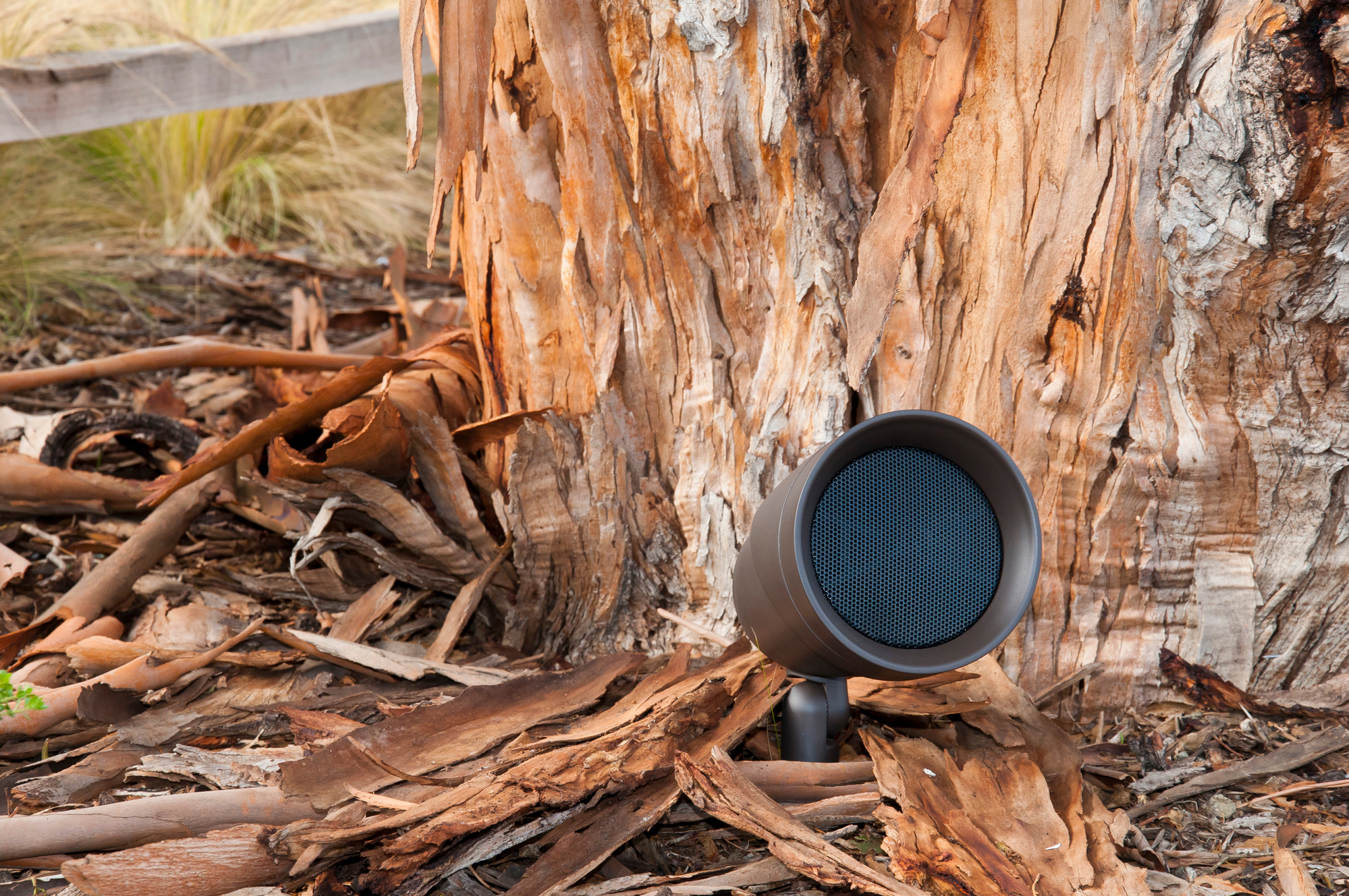
Patios, pools, yards, docks, and workshops see real use, and owners increasingly expect Wi-Fi to reach them. The instinct is often to put a stronger indoor access point near an exterior wall and hope the signal carries outside — but exterior walls tend to be exactly the dense construction that blocks a signal most. A dedicated outdoor-rated access point, mounted under an eave and aimed at the space it covers, works better: it's built for weather exposure indoor equipment isn't rated for, and doesn't have to fight through a wall to get there.
Detached Buildings Are a Separate Design Question
A garage, guest house, workshop, or pool house raises a question before Wi-Fi coverage even comes up: how does that building connect to the network at all? Its access point is only as reliable as the connection feeding it — usually either a point-to-point wireless bridge or a hardwired backbone. We've worked on properties where a wireless bridge that was perfectly adequate when installed became the weak link once the building's device count and traffic outgrew what it was sized for. That's a separate decision from how many access points the building itself needs — we cover the tradeoffs between the two backbone options in our wireless bridge vs. fiber comparison — but it's worth making deliberately, before any access points go up inside.
How AV and Smart-Home Devices Change Wi-Fi Planning
Modern AV and smart-home systems put more load on a network than most people expect. Networked, multi-room audio, for instance, often relies on multicast network traffic to keep wireless speakers in different rooms playing in sync, which behaves differently than a single device just streaming its own content and needs to be designed for, not added on afterward. Streaming devices, networked control systems, cameras, and other smart-home devices all add more simultaneous traffic and higher expectations for consistency. A dropped Wi-Fi packet is a minor annoyance on a phone; it can mean a stuttering speaker group or an unresponsive control system. It's a good reason to plan access points alongside the AV and control system design, not after it.
What a Professional Wi-Fi Design Looks At
A properly planned system starts with a walk-through of the actual construction, not just its square footage, then accounts for device load, realistic mounting locations, wired and PoE capacity at the switch, and channel and power settings that avoid overlap. After installation, it gets tested in the actual spaces it's meant to cover, not assumed to work because the equipment is rated for a certain range.
A Practical Planning Checklist
- How many floors, and what are they built from — wood frame, block, concrete, or a mix?
- Are there detached structures needing their own coverage and backbone connection?
- Which outdoor spaces actually get used, and would benefit from dedicated coverage?
- Roughly how many devices are connected at once during a busy time, not just in total?
- Are there AV, control, multi-room audio, or camera systems depending on consistent performance?
- Can access points reach a central switch on a wired connection, or is that impractical in places?
- Is there room to add devices or square footage later without starting over?
The Right Number Is the Number the Property Actually Needs
There's no shortcut that turns a floor plan into an access point count without looking at the property itself. The right number gives every room, outdoor space, and detached structure reliable coverage and enough capacity for the devices using it — no more, no less. Too few access points leave dead zones; too many, placed without a plan, create their own interference and headaches. WOW Electronics designs Wi-Fi and network systems for larger Yuma-area homes and properties based on the property's actual construction, layout, and device load — not a generic formula. Contact WOW Electronics to have your property evaluated and get a coverage and capacity plan built around how you actually use it.
When you subscribe to the blog, we will send you an e-mail when there are new updates on the site so you wouldn't miss them.