If you've typed "electronics store near me" into your phone while sitting in a Yuma living room, you already know the usual results: a couple of big-box retailers, a warehouse club, and a long list of online marketplaces. They're convenient for a replacement HDMI cable or a new router. But the moment you're trying to get a TV, a sound system, or a houseful of smart devices to actually work together in your specific home, a shelf display stops being much help.
That's the real difference between buying electronics and hiring a local AV integrator: one sells you a box, the other designs, installs and supports a system built around your rooms, your walls and how you actually use them.
What a Big-Box Electronics Store Does Well
A big-box or warehouse electronics store is good at exactly what it's built for: stocking a wide range of brands, letting you compare specs side by side, and getting a product into your hands the same day. For a standalone purchase - a new TV for a bedroom, a soundbar, a basic router - that's often all you need, and there's nothing wrong with shopping that way.
Where it runs out of road is anything that depends on your home's actual layout: wall construction, outlet placement, Wi-Fi coverage through tile and stucco, or how sound behaves in a room with high ceilings and tile floors instead of carpet and drywall. A store associate selling you a box has no way to account for any of that, because they've never seen your house.
Where the Gap Shows Up: Design Before You Buy Anything
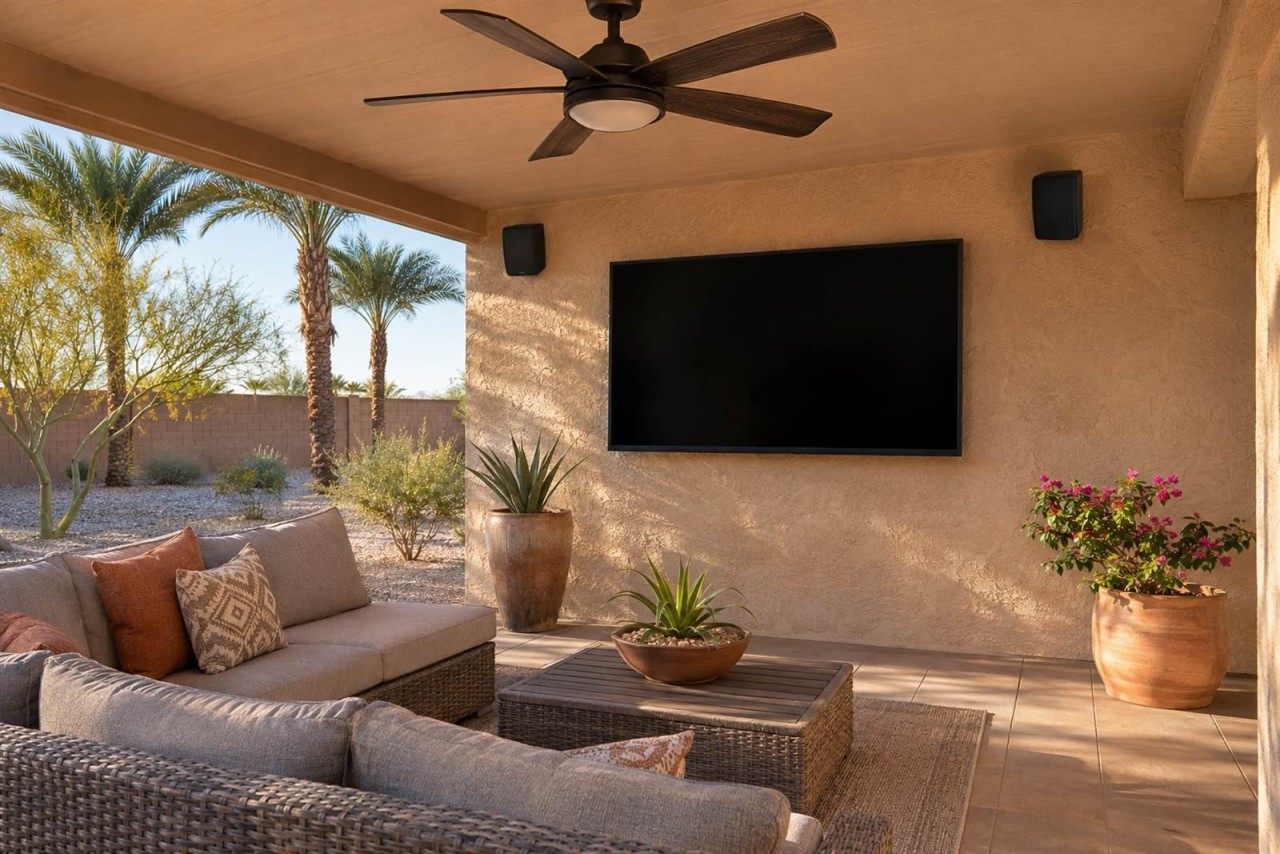
A local integrator starts the opposite way around: by looking at the room, not the shelf. Before any equipment is chosen, a proper whole-home audio plan accounts for where you actually sit and watch, where glare from a west-facing window will hit the screen in the afternoon, and whether one TV or one pair of speakers is even the right call for an open-concept great room versus a media room with a door that closes. Read more about whole-home audio design for Yuma homes.