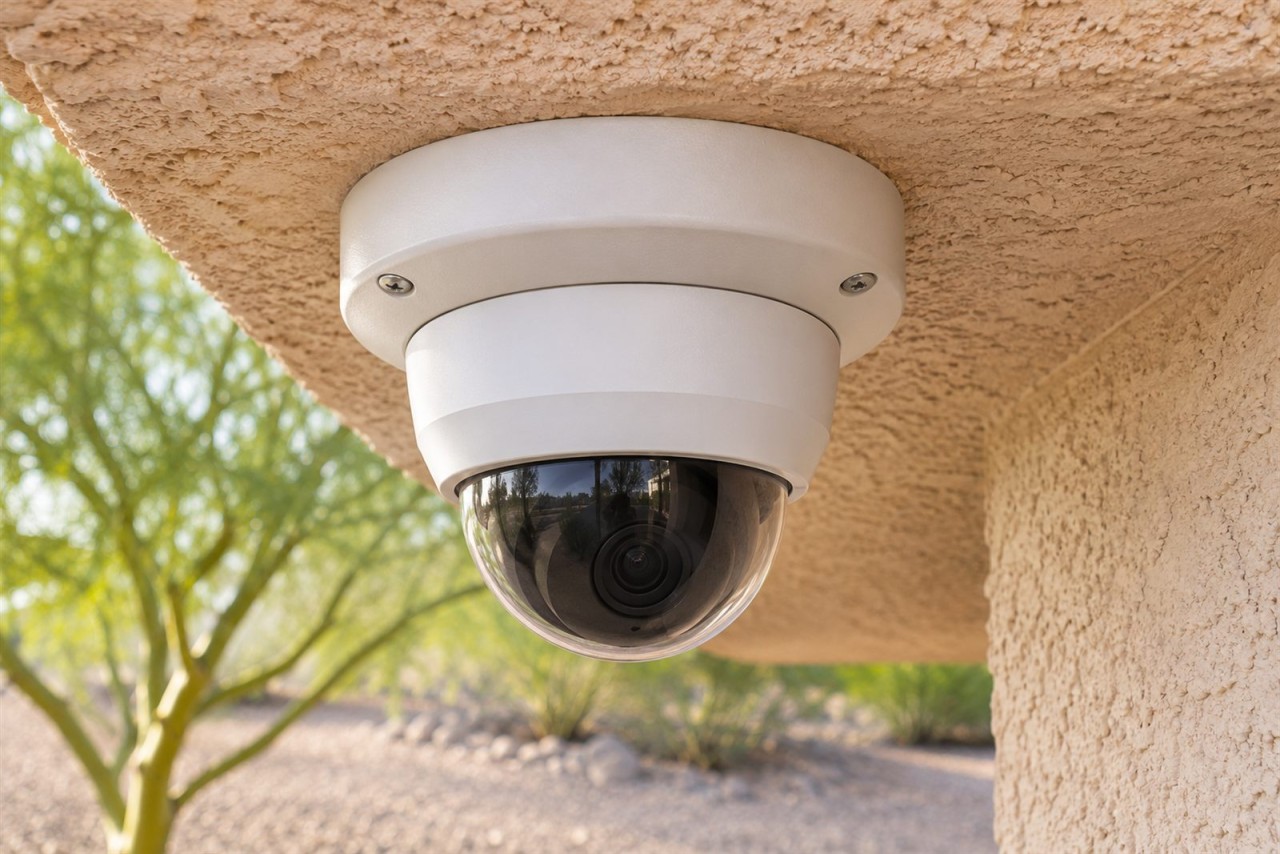
Most homeowners don't think about their security cameras until something doesn't go as planned. For one Yuma homeowner, that moment came when a technician arrived to finish installing a six-camera system and found the camera cables that came with it were simply too short to reach every spot on the house. Rather than leave a half-finished system, the crew stopped, took stock of what was actually possible, and came back with two honest paths forward. It's a situation WOW runs into regularly with customer-supplied camera systems, and this home is one example. This is the kind of real-world decision point that shapes most residential camera projects - not the marketing photo of a shiny new camera, but the practical choice behind it.
The Problem: Cables That Came Up Short
The homeowner already owned a six-camera system, complete with a recorder and the original cables that shipped with it. On paper, finishing the job should have been straightforward: mount the cameras, run the cables, connect the recorder, done. In practice, one of the camera runs needed roughly 80 feet of cable, and the cables on hand topped out around 60 feet. Rather than force a connection that wouldn't hold up, WOW's technicians paused the job and went back to the homeowner with clear options instead of surprises.
That kind of mid-install pause is common with existing camera systems, especially ones installed years apart from the home's current layout. A camera added later, a patio enclosed, a shed moved - any of it can change how far a cable actually needs to run. The fix isn't complicated, but it does mean having an honest conversation about what to do next.
Two Paths Forward
For this home, the choice came down to two reasonable options. The first: keep the existing cameras and recorder, buy the longer cables needed to finish the job, and get the original system fully running. The second: step up to new cameras and a new recorder built for IP video, often with a sharper picture, color night vision, and a phone app for checking in from anywhere.
Neither option is automatically "better" - it depends on what the homeowner actually wants from the system. A family that's happy with their existing picture quality and just wants the cameras finished has little reason to replace equipment that still works. A family that's been wanting to check the cameras from their phone, or wants a clearer picture at night, has a good reason to use the stalled installation as the moment to upgrade. Laying out both paths, with their real tradeoffs, is part of doing this kind of work honestly.